
There is a certain kind of manicure that stops people mid conversation. You are at a coffee shop, you reach for your cup, and someone across the table pauses and says wait, can I see your nails. That is what mexican nails do. They are not quiet. They are not shy. They are a little party happening on the tips of your fingers, and once you understand why they work so well, you will never look at a plain nude manicure the same way again.
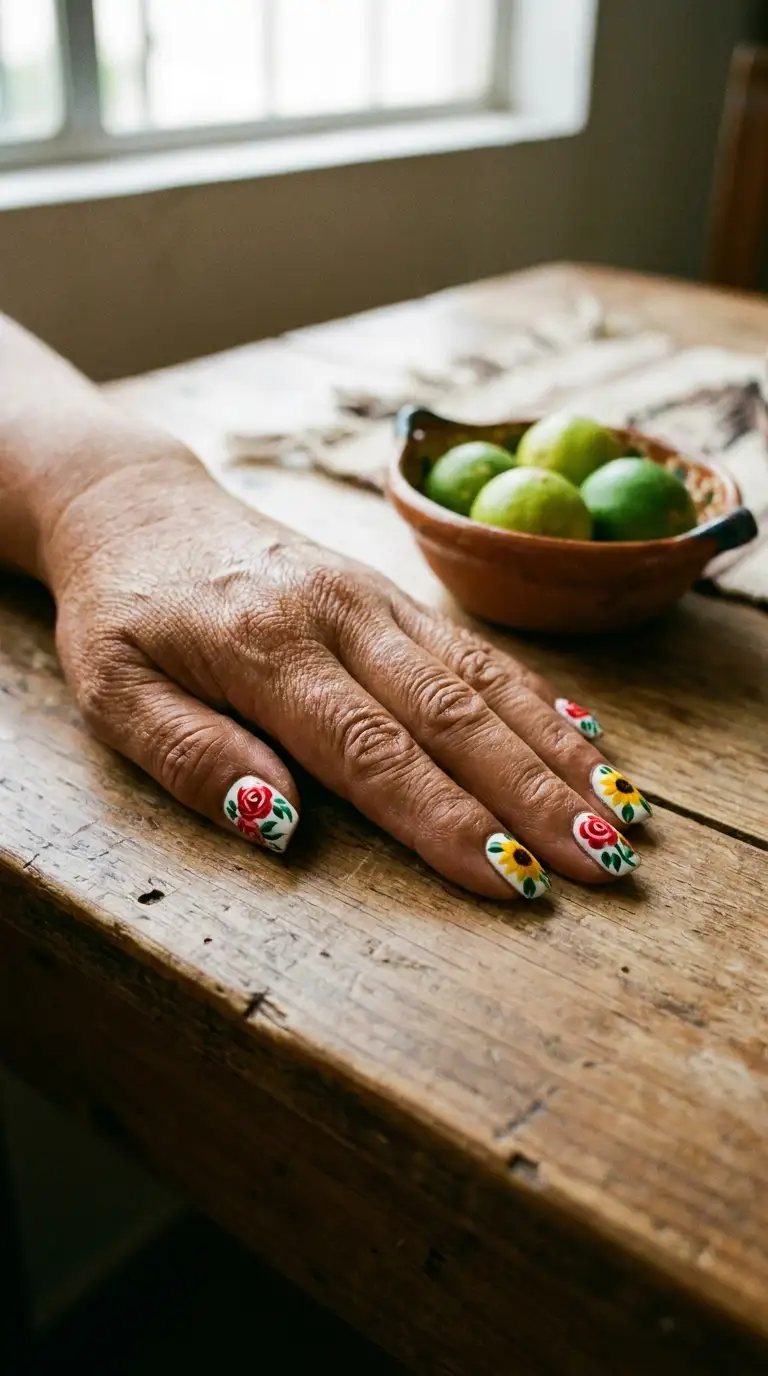
I run a small nail studio, and mexican nails have become one of the most requested styles in my chair over the last two years. Clients come in with screenshots saved from Pinterest, from Instagram reels, from a trip they took to Cancun or Puerto Vallarta, and they all want the same feeling. They want color. They want joy. They want something that looks handmade instead of factory printed. In this guide I am going to walk you through everything I have learned from actually painting these designs, mistake by mistake, client by client, so you can either recreate the look at home or walk into your next salon appointment knowing exactly what to ask for.
Also Read : 40+ Stunning Beach Cruise Nail Ideas That Will Make Every Head Turn On Deck
What Are Mexican Nails Exactly
Mexican nails are a style of nail art inspired by the colors, patterns, and symbols found throughout Mexican culture. Think Talavera pottery, papel picado banners, Frida Kahlo florals, Aztec calendar stones, sugar skulls from Dia de los Muertos, serape blankets, and the bright red, white, and green of the Mexican flag. When nail artists say mexican nails, they usually mean a design that borrows from one or more of these visual traditions and translates it onto a small canvas that happens to be your fingernail.
What makes mexican nails different from a generic colorful manicure is intention. Every color choice and every pattern has roots somewhere. A zigzag border might be a nod to Aztec textiles. A cluster of tiny painted daisies might be inspired by embroidered blouses from Oaxaca. A skull with painted flowers around the eye sockets is almost always a reference to Dia de los Muertos, a holiday that celebrates and remembers loved ones who have passed. So when you ask for mexican nails, you are not just asking for bright polish. You are asking your nail tech to borrow a little bit of storytelling and put it on your hands.
I always tell my clients this before I start a mexican nails set. The design will look better and feel more meaningful if you understand even a small piece of where it comes from. It changes how you talk about your nails when someone asks, and trust me, someone always asks.
Why Mexican Nails Became So Popular
A few years ago mexican nails were mostly seen around Cinco de Mayo or during trips to Mexico. Now they show up year round in salons across the United States, Canada, and parts of Europe. I think there are a few real reasons for this shift, not just a random trend cycle.
First, maximalism came back into fashion. For a long time the nail world was obsessed with minimal nudes, soft pinks, and barely there gel manicures. People got bored. They wanted their hands to say something again, and mexican nails deliver drama without needing rhinestones or acrylic length.
Second, social media rewards texture and contrast. A photo of hand painted florals on a colored base performs so much better on a feed than a single coat of beige. Mexican nails are basically built for the camera because every finger can tell a slightly different visual story while still feeling cohesive as a set.
Third, and this is the part I care about most as an artist, there has been a real cultural shift toward celebrating heritage instead of hiding it. Latina clients in my chair often tell me that requesting mexican nails feels like claiming space and pride in a way that older trends never let them do. That emotional layer is part of why the style has staying power instead of fading out after one season.
The Most Popular Mexican Nails Styles I Paint In My Studio
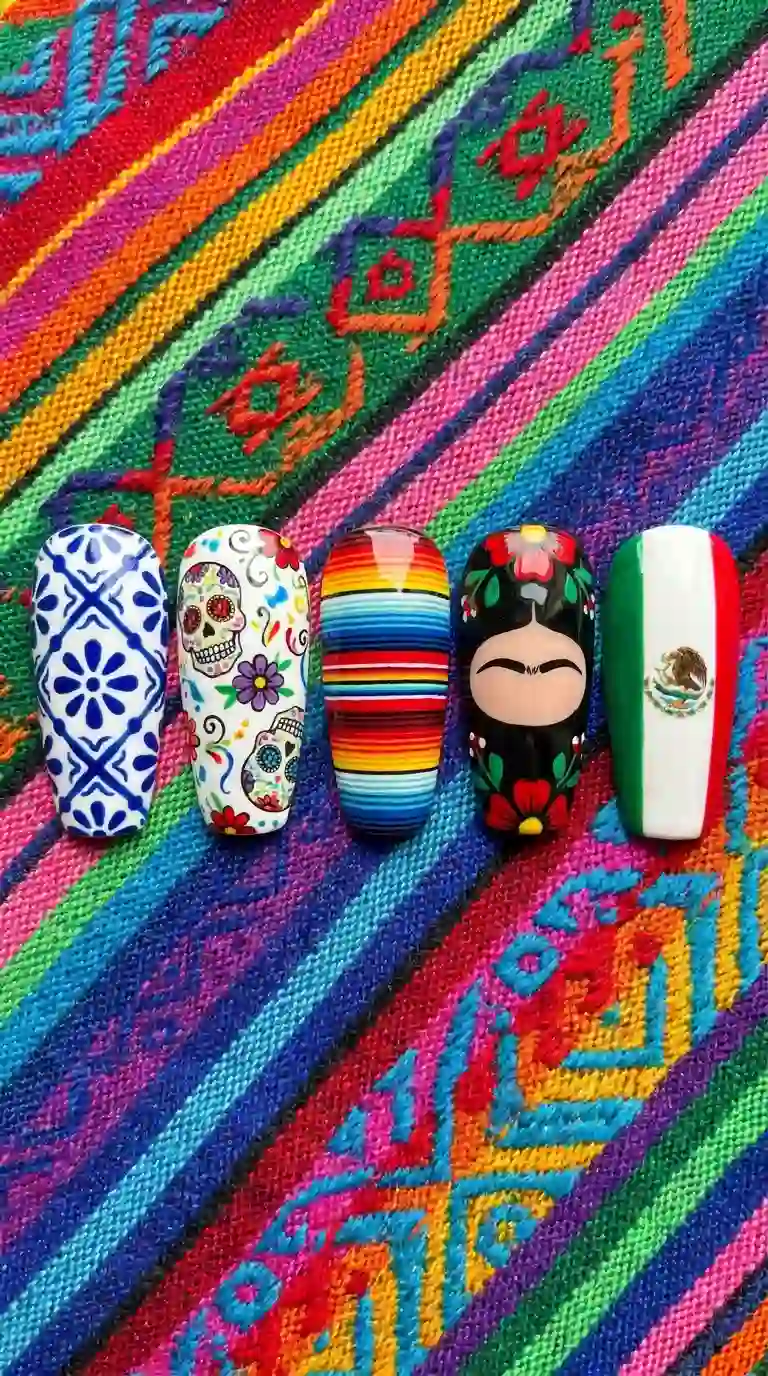
There is not just one look under the mexican nails umbrella. Over the years I have grouped requests into a handful of categories that keep coming back season after season. Knowing these categories will help you describe exactly what you want when you sit down in the chair, because trust me, a nail tech who hears mexican nails without any other detail is going to ask you a dozen follow up questions.
Read Also: Cherry Nail Design: 50 Sweet, Stunning and Show Stopping Ideas Every Nail Lover Needs To Try
Talavera Pottery Mexican Nails
Talavera is a style of hand painted ceramic that originated in Puebla, Mexico. It usually features cobalt blue, sunshine yellow, and deep red florals painted over a bright white glaze, often with black outlining that gives every petal a clean, almost stained glass look. When clients ask me for mexican nails and show me a picture of painted plates or tiles, this is almost always what they mean.
To recreate Talavera style mexican nails, I start with a crisp white base coat. White has to be opaque and even, because any streakiness will show through the fine detail work later. Once that is cured, I use a detail brush to paint small floral clusters in cobalt blue and sunshine yellow, then I go back with a tiny liner brush and add thin black outlines around each petal. It sounds simple written out like this, but the patience it takes to keep every line consistent across ten nails is where the real skill comes in.
Sugar Skull Mexican Nails
Sugar skull mexican nails are inspired by Dia de los Muertos, the Day of the Dead celebration that honors deceased loved ones with altars, marigolds, candles, and decorated skulls called calaveras. The nail version usually places one detailed skull as an accent nail, painted with swirling floral patterns around the eyes and a small flower crown on top, while the remaining nails carry supporting colors like deep purple, marigold orange, or black glitter.
This design takes the longest of anything I do in my chair, often forty five minutes just for the accent nail alone. I always ask clients if they understand the meaning behind sugar skull mexican nails before we begin, because I want the design to be worn with respect for where it comes from, not just because it looks cool in a photo.
Serape Stripe Mexican Nails
Serape blankets are those famous multicolor striped textiles you have probably seen draped over chairs at Mexican restaurants or worn as ponchos. Serape stripe mexican nails translate those bold horizontal or diagonal stripes directly onto the nail bed, usually in a rainbow order of pink, orange, yellow, green, blue, and purple with thin black lines separating each color block.
This is actually one of the easier mexican nails styles to do at home because it relies on straight lines rather than freehand florals. A striping brush and a steady hand, or even nail vinyl stencils, can get you most of the way there.
Mexican Flag Inspired Nails
Simple, bold, and perfect for Independence Day or Cinco de Mayo, this version of mexican nails uses the red, white, and green of the flag in color blocked sections, sometimes with a tiny hand painted eagle or nopal cactus as an accent detail. It is the most requested style around September fifteenth, when Mexican Independence Day celebrations fill my calendar with back to back appointments.
Floral Frida Inspired Mexican Nails
Frida Kahlo remains one of the most recognizable cultural icons associated with Mexican art, and her signature look, a crown of vivid flowers, has become its own category of mexican nails. This style leans heavily on roses, marigolds, and dahlias painted in saturated pinks, oranges, and reds against a neutral or black base, often finished with tiny gold leaf accents for extra shine.
Cactus And Desert Mexican Nails
Not every mexican nails design has to be busy. Cactus and desert themed sets keep things playful and a little more minimal, with small painted saguaro cacti, terracotta tones, and sandy neutrals. This style has become popular with clients who love the cultural inspiration but want something they can wear to the office without feeling too loud.
How To Choose The Right Mexican Nails Design For You
I get asked this question constantly, so let me break down how I actually help clients pick their design when they are not sure which direction to go.
Start with your event or reason for wanting mexican nails. Traveling to Mexico soon? Serape stripes or a floral Talavera look photograph beautifully against beach backdrops. Celebrating Dia de los Muertos or attending a family remembrance event? Sugar skull mexican nails carry more emotional weight and are worth the extra chair time. Just want something fun for everyday wear? Cactus and desert mexican nails or a simplified floral accent nail will not overwhelm your daily outfits.
Next think about your nail length and shape. Detailed mexican nails patterns like sugar skulls and Talavera florals genuinely look better on medium to long nails because there is more surface area for the fine linework to breathe. If you keep your nails short, I usually suggest simplifying the design, maybe one accent nail with a small painted detail rather than trying to cram a full scene onto a tiny canvas.
Finally, be honest about your maintenance habits. Mexican nails with heavy hand painted detail need a strong top coat and gentle handling for the first few hours while everything cures completely. If you are hard on your hands, gardening, doing dishes constantly, working with your hands in a physical job, we might lean toward a slightly simpler design or use gel instead of regular polish so the artwork holds up longer.
Must Read : Sun Nail Design Ideas That Will Make Your Manicure Glow All Summer Long
Step By Step: How I Create A Mexican Nails Set In My Chair
People love watching this process, so let me walk you through it exactly the way I do it for clients, whether it is a full sugar skull scene or a simple serape stripe set.
Step One: Prep The Natural Nail
Every good mexican nails set starts with proper prep, and honestly this is the step people skip when they try it at home and then wonder why their polish chips within two days. I push back cuticles gently, buff the surface of the nail lightly to remove shine, and wipe everything down with alcohol to remove oils. Skipping this step is the number one reason mexican nails designs peel early.
Step Two: Apply The Base Color
Most mexican nails styles start with either a bright white, a deep black, or a soft nude base depending on the design. White works best for Talavera because it mimics the ceramic glaze. Black works beautifully for sugar skulls because it makes the floral colors pop with more contrast. I apply two thin coats, curing under LED light between each layer if using gel polish.
Step Three: Sketch The Design Lightly
For detailed mexican nails work, I sometimes use a very fine dotting tool to lightly mark out where major elements will sit before committing with color. This is basically the nail art version of sketching in pencil before inking a drawing. It saves so much time because I am not erasing full sections of polish when a flower placement looks off.
Step Four: Layer In Color
This is where the magic actually happens with mexican nails. I build color in layers, starting with the largest shapes first, like the base of a flower petal or the outline of a skull, then working smaller and smaller until I reach the fine details like veins in a leaf or tiny dots forming a border pattern. Patience here matters more than raw painting talent. I have trained nail techs who paint slower than me but produce cleaner mexican nails because they never rush the layering.
Step Five: Add Fine Line Detail
A tiny liner brush loaded with black or dark brown polish is what gives mexican nails that crisp, almost cartoon outlined look that mimics traditional Mexican folk art. This step separates amateur looking nail art from professional mexican nails, so if you are practicing at home, invest in a genuinely good detail brush rather than trying to use the brush that comes attached to a polish bottle cap.
Step Six: Seal With Top Coat
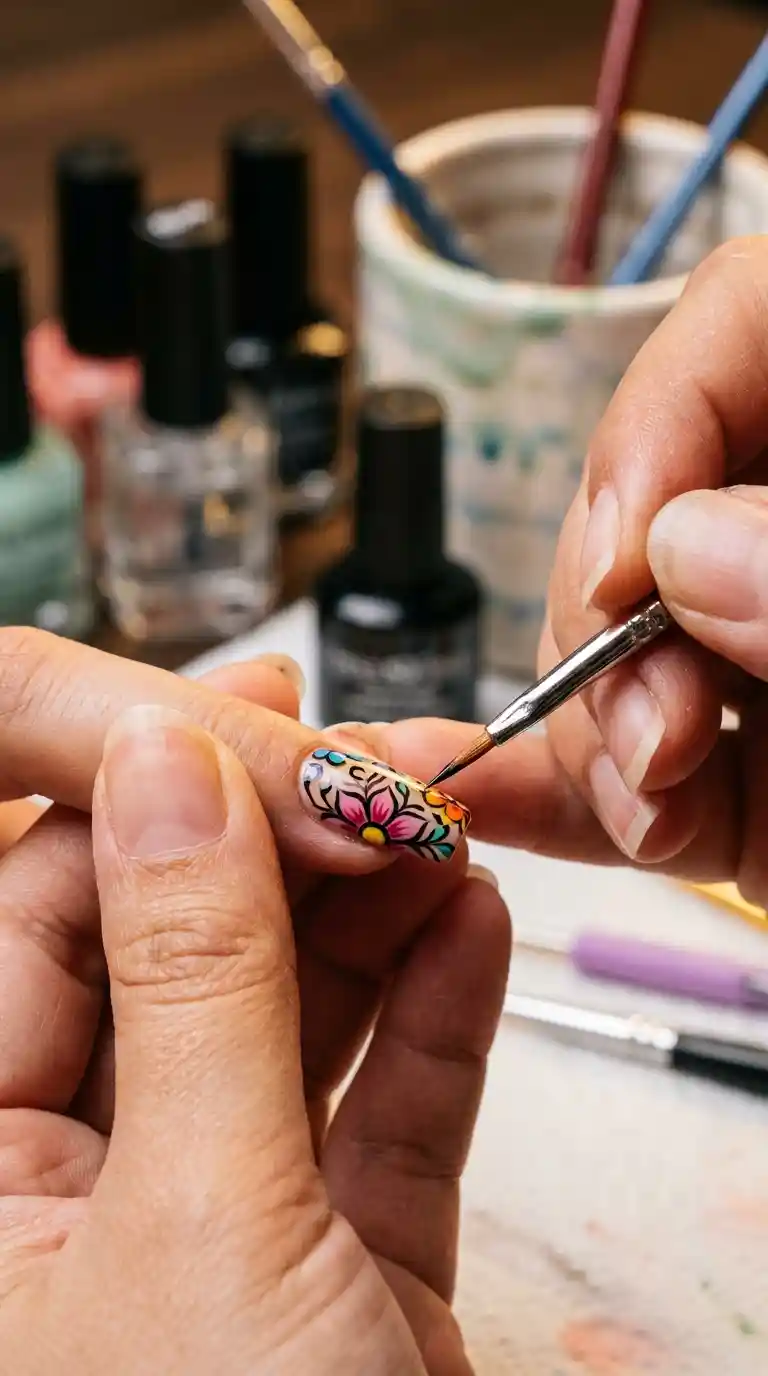
Because mexican nails often have raised texture from layered polish, I always apply a slightly thicker top coat than usual to smooth everything out and protect the artwork. This is also the step where I add any final shimmer, gold leaf flakes, or glitter accents that the design calls for.
Mexican Nails Color Palettes That Actually Work
Color choice makes or breaks a mexican nails design, and I have tested a lot of combinations over the years. Here are the palettes I reach for most often, along with why they work.
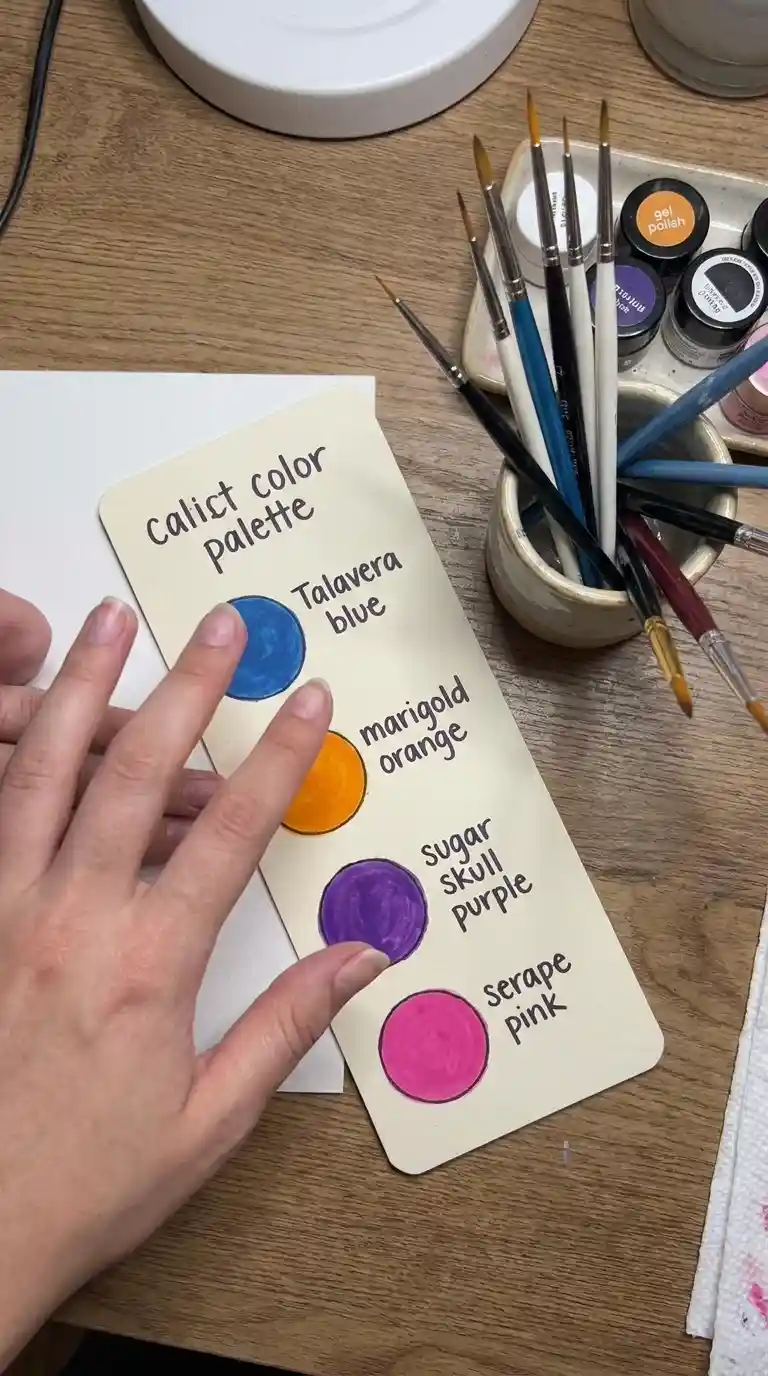
The classic Talavera palette pairs cobalt blue, sunshine yellow, poppy red, and crisp white. This combination is high contrast and reads clearly even from a distance, which is why it photographs so well.
The sugar skull palette leans into deep purple, marigold orange, hot pink, and black. These colors mimic traditional Dia de los Muertos altar decorations, where marigolds and candlelight dominate the visual field.
The serape rainbow palette uses pink, orange, yellow, green, turquoise, and purple in equal measure. Because there are so many colors in one set, I usually recommend keeping the pattern simple, straight stripes rather than florals, so the eye is not overwhelmed.
The earthy desert palette softens things with terracotta, sand, sage green, and cream. This is my go to suggestion for clients who love mexican nails inspiration but work in more conservative environments.
Read Also : White Nail Design: The Timeless Manicure Trend Every Nail Lover Needs To Try
Mexican Nails For Different Occasions
Mexican Nails For Cinco de Mayo
Cinco de Mayo brings a wave of mexican nails requests every single year, usually flag inspired color blocking or simple red, white, and green florals. I keep these designs a little quicker to execute since most clients are booking last minute for a party or event that same week.
Mexican Nails For Dia de los Muertos
This is where sugar skull mexican nails shine the most. Clients often want a full scene, marigolds, candles, a painted skull, sometimes even a small portrait style accent representing a loved one. I always take extra time during consultation for these appointments because the meaning behind the design matters just as much as the technique.
Mexican Nails For Weddings And Quinceaneras
Believe it or not, mexican nails have become a popular choice for brides and quinceanera celebrants who want to honor their heritage on their big day. These versions usually tone down the boldness slightly, incorporating white, gold, and soft pastel florals inspired by traditional patterns but dressed up for a formal event.
Mexican Nails For Vacation
If you are heading to Cancun, Tulum, Puerto Vallarta, or Mexico City, bright serape stripes or Talavera florals against a tanned hand look incredible in vacation photos. I get so many requests the week before spring break specifically for this reason.
Mexican Nails At Home: What You Actually Need
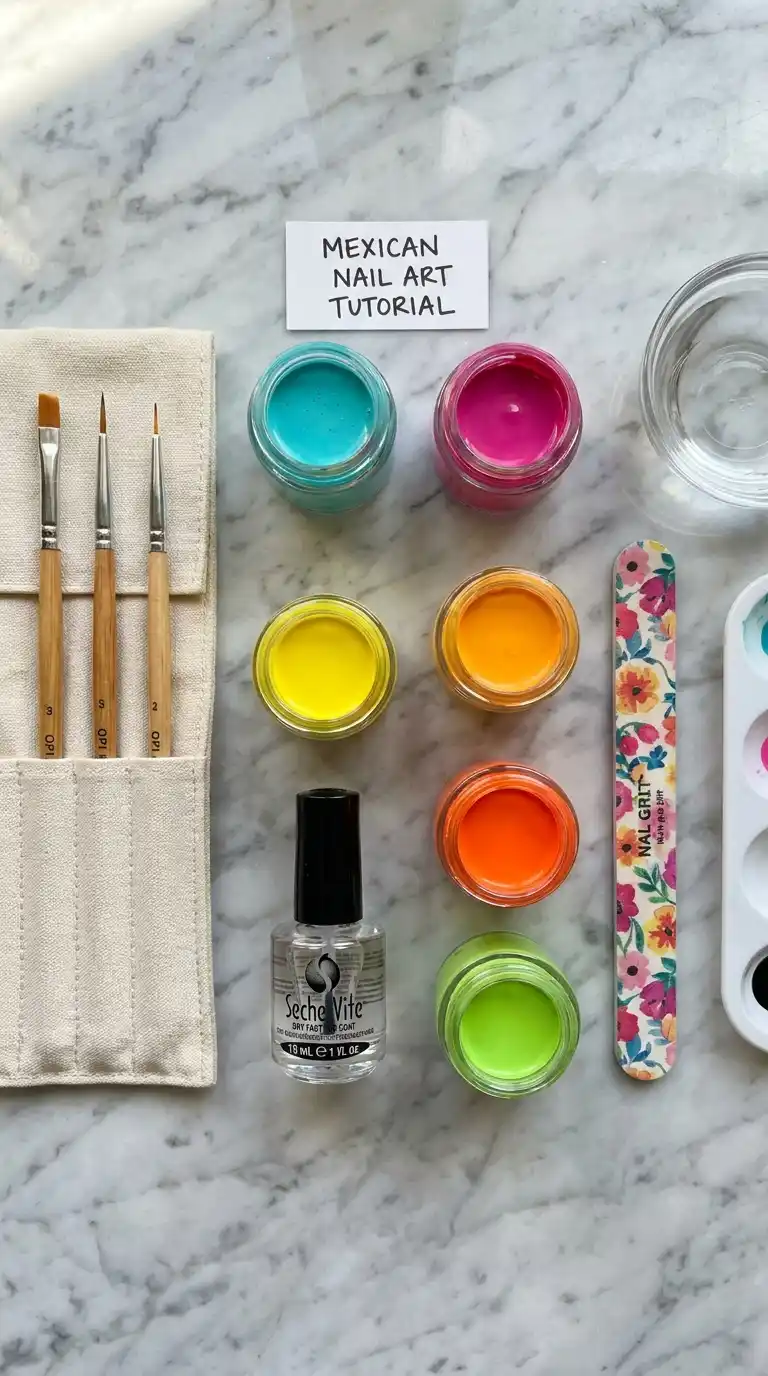
Not everyone has access to a nail studio, and I fully support people trying mexican nails designs at home. Here is exactly what I recommend keeping in your kit.
You will want a genuinely fine detail brush, not the one that comes free with cheap polish sets. Something with a size 000 or 00 tip gives you the control needed for florals and outlining. A dotting tool is also worth owning for creating consistent small circles used in borders and flower centers.
For polish, a solid white and black are non negotiable for most mexican nails styles because they form the base and the outlines for nearly every design category. Beyond that, stock cobalt blue, marigold orange, poppy red, and a bright pink, since those four colors alone can recreate most of the palettes I described earlier.
A good top coat matters more than people realize. Because mexican nails often involve layered, textured polish work, a thin or watery top coat will drag your linework and ruin hours of effort in seconds. Spend a little more here.
Finally, keep polish remover and small angled cleanup brushes nearby. Even professionals make small mistakes while painting mexican nails, and being able to clean up a stray line without redoing the whole nail saves enormous amounts of time.
Beginner Friendly Mexican Nails Ideas
If you are new to nail art, do not start with a full sugar skull scene, you will get frustrated fast. Start with serape stripes, which only require straight lines and a striping brush. Move on to simple three petal flowers once you feel confident with color layering. Save Talavera florals and detailed skulls for once you have a few practice sets under your belt.
Common Mistakes People Make With Mexican Nails
I have corrected a lot of at home mexican nails attempts that came into my studio for fixing, so let me save you the trouble.
The biggest mistake is rushing the base coat. If your white or black base is streaky, every color layered on top will look muddy and uneven. Always apply two full coats and let each one cure completely.
The second mistake is overcrowding the design. Mexican nails are colorful by nature, but that does not mean every square millimeter needs to be filled. Leaving small breathing room between elements actually makes the whole set look more intentional and professional.
The third mistake is using the wrong brush for detail work. A thick brush cannot create the thin, confident lines that define traditional Mexican folk art patterns. If your lines look shaky or thick, invest in a proper detail liner brush before trying again.
The fourth mistake is skipping the top coat, or applying it too thin. Mexican nails with raised texture from layered paint need real protection, otherwise the design chips within a day or two of normal wear.
How Long Do Mexican Nails Last
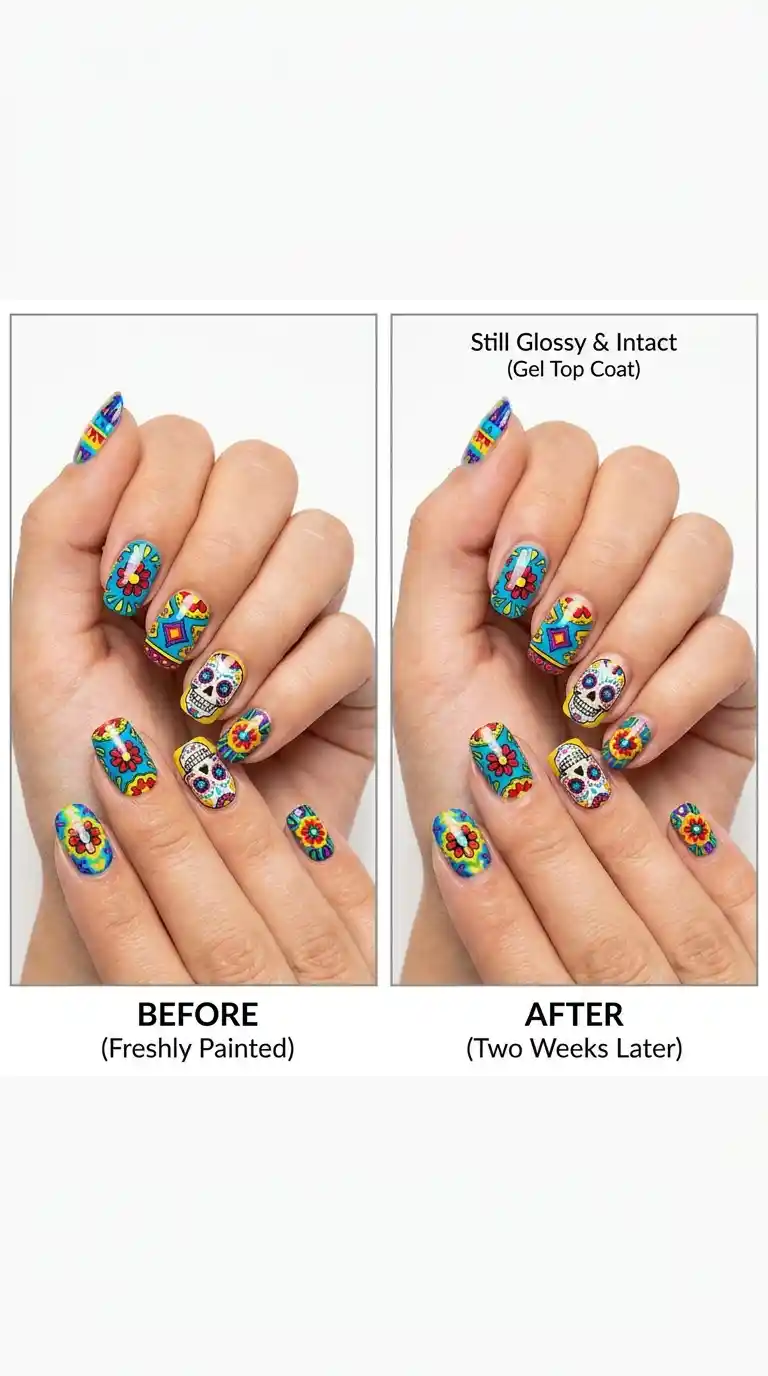
With gel polish and proper top coat sealing, a well done set of mexican nails should last two to three weeks before you start seeing noticeable growth or minor chipping at the tips. Regular polish versions typically last five to seven days with careful handling. The detailed nature of these designs means the difference between gel and regular polish is more noticeable than with a simple solid color manicure, so if you are investing the time into detailed mexican nails artwork, I almost always recommend gel to protect that investment.
Mexican Nails And Nail Health: What I Tell Every Client
I care about the health of the natural nail underneath all this artwork, and I think this gets overlooked in a lot of nail art content. Detailed mexican nails require multiple thin layers of polish, and while that is fine occasionally, doing this style back to back every two weeks without breaks can weaken the natural nail over time.
I recommend giving your nails a short rest between elaborate mexican nails sets, even just a week with a simple strengthening base coat and no color, to let the nail bed recover. I also encourage clients to use cuticle oil daily, especially around the edges where detailed painting can sometimes dry out the surrounding skin from repeated small brush contact.
If you notice peeling, thinning, or unusual sensitivity after wearing mexican nails, that is your body telling you to take a short break before the next detailed set. A good nail tech will never push back on this request, and honestly, we appreciate clients who take their nail health seriously just as much as their nail art.
Read Also : 87 Gorgeous Dip Powder Nails Ideas That Will Instantly Upgrade Your Manicure Game
Mexican Nails Shapes: Which One Works Best
Almond Shaped Mexican Nails
Almond shapes give a soft, elegant frame for floral mexican nails designs. The tapered tip naturally draws the eye toward the center of the nail, which is perfect for showcasing a detailed flower cluster or a small painted skull.
Coffin Shaped Mexican Nails
Coffin, sometimes called ballerina shape, offers the widest flat surface area of any popular shape, which makes it my top recommendation for clients who want a full detailed scene like Talavera patterns or sugar skulls with lots of surrounding elements.
Square Mexican Nails
Square shapes work beautifully for serape stripes and geometric Aztec inspired mexican nails because the straight edges echo the straight lines already present in the design.
Round Or Short Mexican Nails
Do not think you need long nails to enjoy this trend. Round or short mexican nails with a single simplified floral accent or a small painted detail on just one or two fingers can look just as intentional and beautiful, especially for clients in professional settings.
Mexican Nails Inspired By Regional Mexican Art
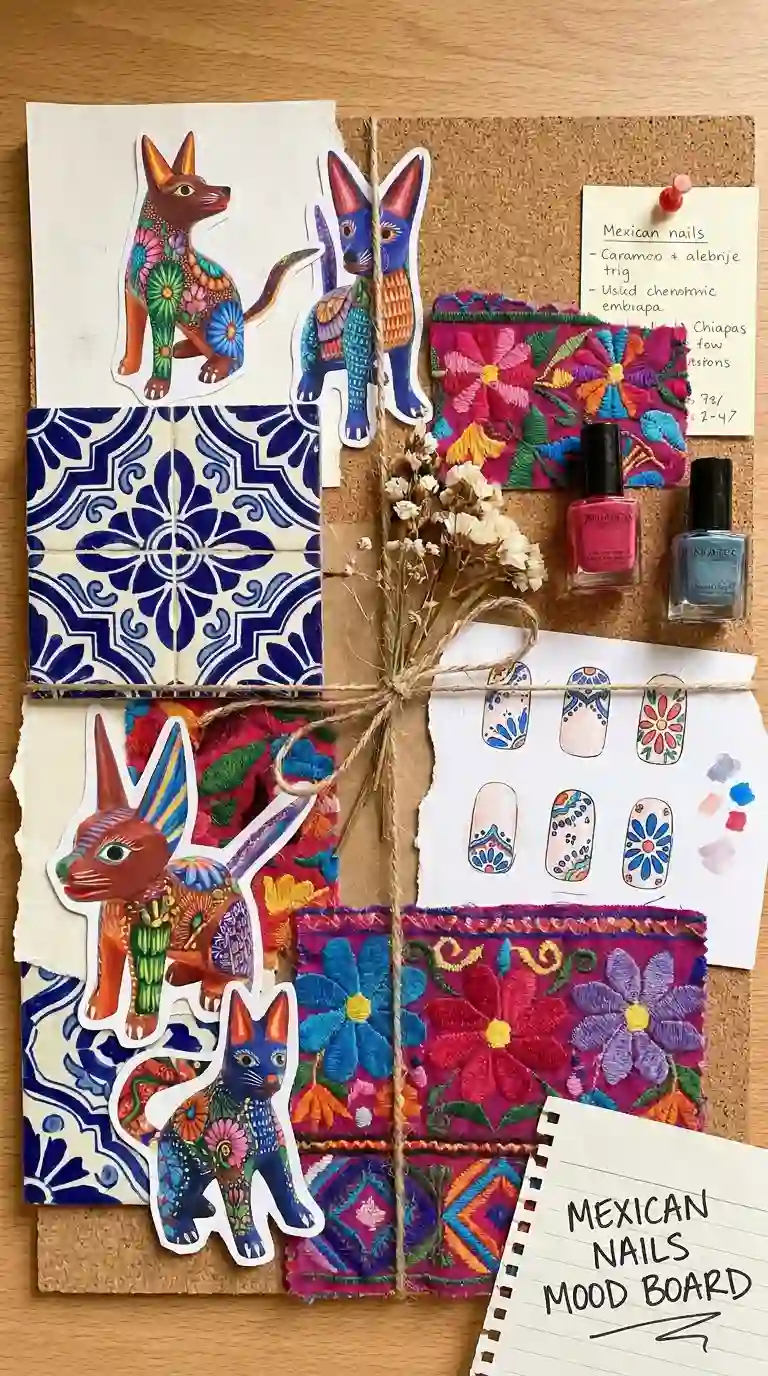
Mexico is an enormous country with dozens of distinct regional art traditions, and the more I have studied this for my own work, the more I realize mexican nails can pull inspiration from far more than just Talavera and sugar skulls.
Oaxaca is known for alebrijes, brightly colored fantastical wooden creatures covered in intricate patterns. I have translated this into nail art using tiny painted scale patterns in unexpected color combinations like turquoise and magenta together, giving a set of mexican nails a more whimsical, almost surreal quality.
Chiapas produces stunning embroidered textiles with dense floral patterns in saturated thread colors. This translates beautifully into a busier style of mexican nails where nearly the entire nail is covered in small repeating flower and leaf motifs rather than one large centered design.
Michoacan is famous for its copper work and pottery featuring fish and nature motifs. Clients who want something a little different from the typical Talavera look sometimes ask me to incorporate small painted fish or leaf patterns inspired by this region instead.
Learning about these regional differences has genuinely made me a better artist, and I think it gives clients a richer experience too, because now when someone asks for mexican nails, I can ask a follow up question about which specific tradition speaks to them rather than defaulting to the same handful of designs every time.
Mexican Nails Product Recommendations From My Kit
I get asked constantly what products I personally reach for, so here is an honest rundown based on what actually performs well during long detailed sessions.
For base polish, I prefer a gel formula with strong opacity so I am not fighting streaky white or black coverage before I even start the artwork. Thin, watery formulas waste time and patience.
For detail work, acrylic paint pots designed specifically for nail art tend to give crisper lines than regular polish because the consistency is thicker and more controllable under a fine brush.
For brushes, a genuine kolinsky or synthetic detail liner in size 000 has become non negotiable in my kit. Cheap brushes shed bristles mid design, which is incredibly frustrating when you are forty minutes into a sugar skull accent nail.
For top coat, I use a slightly thicker no wipe gel top coat specifically because mexican nails so often involve raised, textured linework that a thin top coat simply cannot seal properly.
Talking To Your Nail Tech About Mexican Nails
If you are heading into a salon rather than doing this at home, here is how to get the best result from your appointment. Bring reference photos, even multiple ones, showing different angles of the design you like. Mexican nails cover such a wide range of styles that a single word description often leads to miscommunication.
Be upfront about your budget and time availability. Detailed mexican nails, especially full sugar skull scenes, can take over an hour of extra time compared to a standard manicure, and pricing usually reflects that added labor. A good nail tech will tell you honestly if your reference photo requires more time than your appointment slot allows, and it is worth rescheduling rather than rushing detailed cultural artwork.
Ask about the meaning behind elements if you are unsure. Sugar skulls, marigolds, and certain color combinations carry cultural weight, and most nail techs who specialize in mexican nails are happy to explain what they are painting and why, which makes the whole experience feel more collaborative rather than transactional.
Caring For Your Mexican Nails Between Appointments
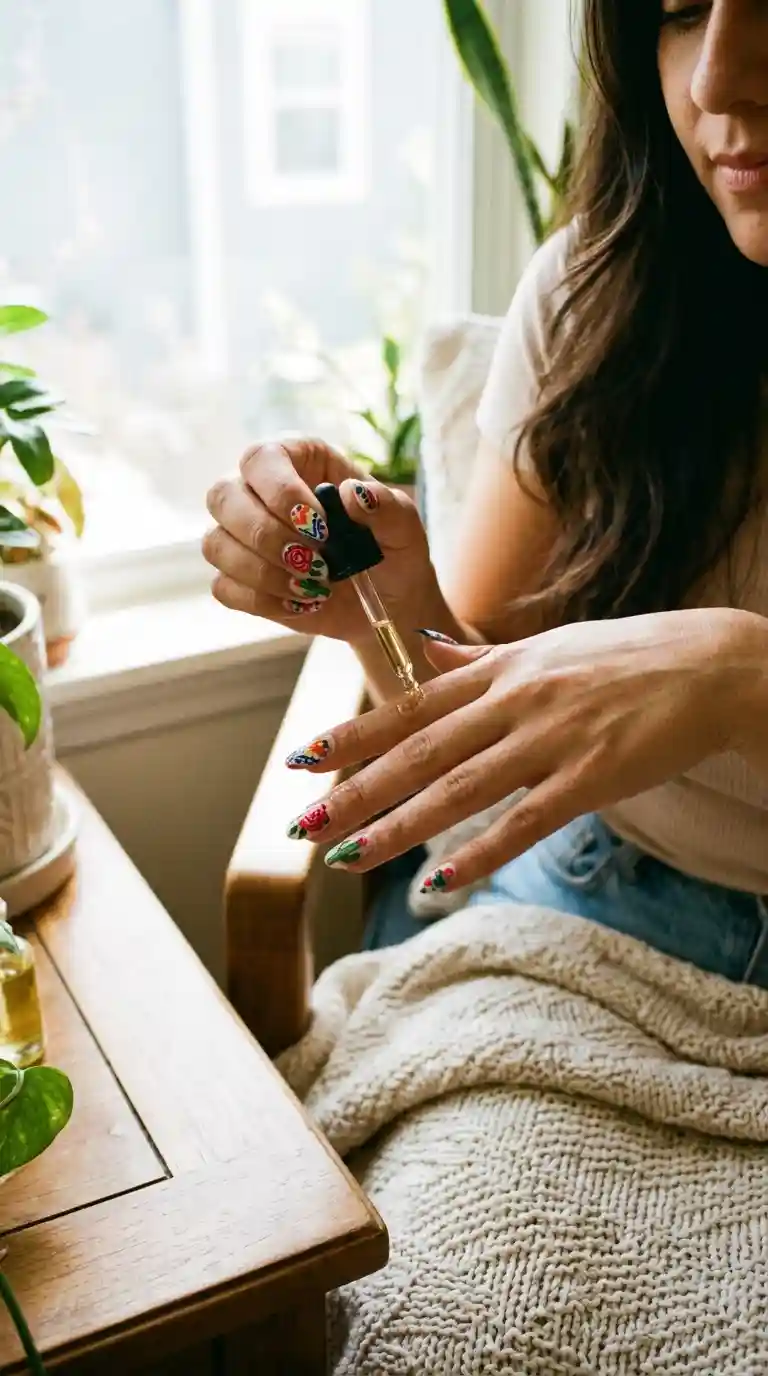
Once your mexican nails are finished, a little bit of daily care goes a long way toward extending their life. Apply cuticle oil every night before bed to keep the surrounding skin hydrated, which also helps prevent lifting at the edges where detailed painting sits closest to the cuticle line.
Wear gloves for any heavy cleaning, dishwashing, or gardening. Harsh chemicals and prolonged water exposure are the fastest way to dull the shine and lift the edges of detailed nail art, and mexican nails with their multiple layers of polish are especially vulnerable during the first few days after application.
Avoid using your nails as tools. I know this sounds obvious, but I cannot count how many clients have come back with a chipped accent nail because they used it to open a soda can or scrape off a sticker. Detailed mexican nails artwork takes real time to create, so treat your hands a little more gently during the two to three weeks you are wearing them.
Touch up your top coat every four to five days if you want to extend wear time. A thin fresh layer of top coat reglossed over the existing design can add several extra days of shine and chip resistance without needing a full redo.
Also Read : Green and Pink Nails: The Ultimate Guide to the Prettiest Color Clash You Will Ever Wear
The Cultural Respect Conversation Around Mexican Nails
I want to address this directly because it comes up in my studio more than you might expect. Some clients, especially those without Mexican heritage themselves, ask me if it is okay for them to request mexican nails. My honest answer, based on conversations with many Latina clients and fellow artists over the years, is that appreciation done thoughtfully is generally welcomed, especially when it comes from genuine admiration for the art form rather than a careless costume style approach.
The difference usually comes down to intention and respect. Understanding what a sugar skull represents, learning why certain colors appear together in Talavera work, and choosing to celebrate rather than mock these traditions makes a real difference. I always encourage clients to learn a little bit about the background of whatever mexican nails design they choose, not because it is required, but because it genuinely makes the experience richer and shows respect for the culture the art comes from.
Mexican Nails Pricing: What To Expect
Pricing for mexican nails varies enormously based on detail level and your local market. A simple serape stripe set or a color blocked flag inspired design usually costs close to a standard gel manicure price, sometimes with a small nail art upcharge of ten to twenty dollars total. A full detailed set with Talavera florals across all ten nails or a sugar skull accent nail scene can run significantly higher, often reflecting an extra thirty minutes to over an hour of additional hand painting time.
I always recommend asking for a price estimate during booking rather than being surprised at checkout, since detailed mexican nails genuinely require more time and skill than standard nail services, and pricing should reflect that fairly for both the client and the artist.
Seasonal Trends: How Mexican Nails Change Throughout The Year
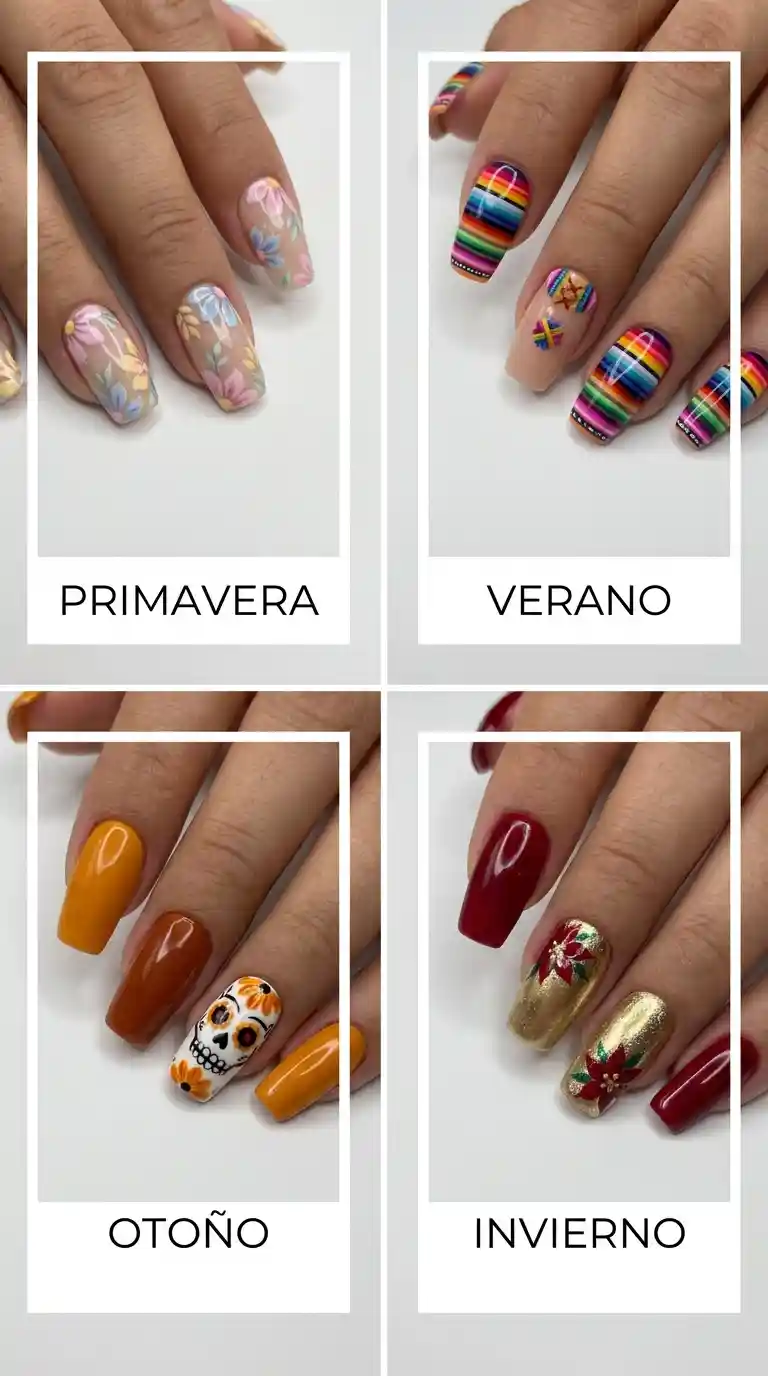
Spring brings requests for softer floral mexican nails, often pastel versions of Talavera patterns paired with fresh white bases, perfect for the warming weather and blooming flowers that inspire the original art form.
Summer is peak serape stripe and vacation ready mexican nails season, with clients wanting bold, saturated colors that photograph well against tanned skin and beach backdrops.
Fall centers heavily around Dia de los Muertos, bringing a surge in sugar skull mexican nails requests along with marigold orange and deep purple palettes that dominate my booking calendar from late September through early November.
Winter sees a shift toward richer, jewel toned mexican nails, deep reds paired with gold leaf accents, often requested for holiday parties and family gatherings where clients want something festive but still rooted in cultural design.
Frequently Asked Questions
What are mexican nails called?
Mexican nails do not have one single official name, but common terms include Mexican nail art, Talavera nails when referencing the pottery style specifically, and sugar skull nails when referencing Dia de los Muertos inspired designs. The overall category is simply referred to as mexican nails by most clients and artists.
How do you do mexican style nails at home?
Start with a solid white, black, or nude base coat, then use a fine detail brush and small amounts of acrylic paint or polish to layer floral patterns, stripes, or skull motifs, finishing with thin black outlining and a protective top coat. Practicing simple serape stripes first before attempting detailed florals helps build the control needed for mexican nails at home.
What colors are used for Mexican nails?
The most common colors for mexican nails include cobalt blue, sunshine yellow, poppy red, marigold orange, deep purple, hot pink, and crisp white, often finished with black outlining for definition. These colors are drawn directly from Talavera pottery, serape textiles, and Dia de los Muertos decorations.
What do sugar skull nails mean?
Sugar skull nails reference calaveras, decorated skulls used during Dia de los Muertos to honor and remember deceased loved ones. The floral patterns and bright colors painted around the skull represent celebration of life rather than mourning, which is why the imagery is festive rather than somber.
Are mexican nails only for Cinco de Mayo?
No, mexican nails are worn year round, though requests do spike around Cinco de Mayo, Mexican Independence Day in September, and Dia de los Muertos in late October and early November. Many clients wear simplified versions of these designs throughout the entire year.
How long do mexican nails last?
With gel polish and a proper top coat, mexican nails typically last two to three weeks before noticeable growth or chipping occurs. Regular polish versions usually last around five to seven days with careful handling.
What nail shape is best for mexican nails?
Coffin and almond shapes offer the most surface area for detailed floral or skull designs, while square shapes work particularly well for geometric serape stripe patterns. Round and short nails can still carry simplified single accent designs beautifully.
How much do mexican nails cost at a salon?
Simple color blocked or striped mexican nails usually cost close to a standard gel manicure with a small nail art upcharge, while detailed sugar skull or full Talavera sets can cost significantly more due to the extra time required for hand painting.
Can you get mexican nails with acrylics?
Yes, mexican nails work well over acrylic extensions, and many clients choose acrylic specifically for the added length, which gives more surface area for detailed floral or skull patterns.
What brushes do you need for mexican nails art?
A fine detail liner brush in size 000 or 00 is essential for outlining and small floral details, while a dotting tool helps create consistent circles for flower centers and border patterns commonly seen in mexican nails designs.
Final Thoughts From My Chair
After years of painting mexican nails on hundreds of clients, what still strikes me is how much joy this style brings into an otherwise ordinary appointment. People leave my chair smiling in a different way than they do after a plain manicure. There is something about wearing a tiny piece of storytelling on your hands, whether that is a painted Talavera flower or a marigold wrapped sugar skull, that makes the whole experience feel personal rather than routine.
If you are considering mexican nails for the first time, my honest advice is to start with a design that genuinely speaks to you rather than picking whatever is trending that week. Learn a little about where the pattern comes from. Bring good reference photos to your appointment. Be patient with the process, because the best mexican nails take real time and real skill to execute properly. And once you have them on, wear them proudly, because that is exactly what this art form was always meant to inspire.